Regular licence
$28
Fits most projects. All the design and code files, for one end product.
- Future updates
- 6 months support from the author
- Main project and starter project
- Landing page
- Design files (Figma)
- Usable in a single end product
Build beautiful applications
Gogo puts labels next to its icons and packs more onto each screen. It suits teams whose users live in the admin all day and want everything one click away.
5,000+ copies sold across both builds
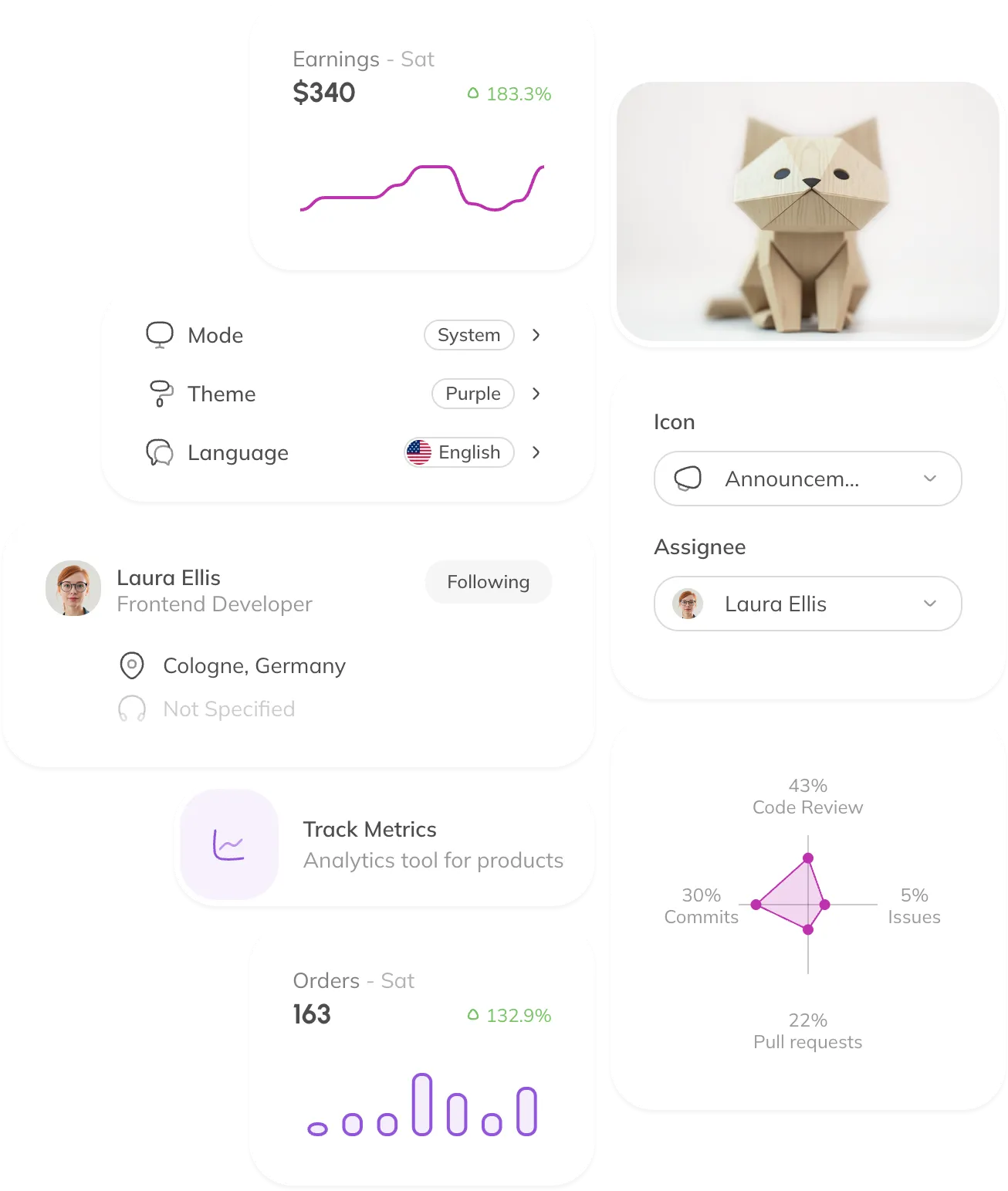
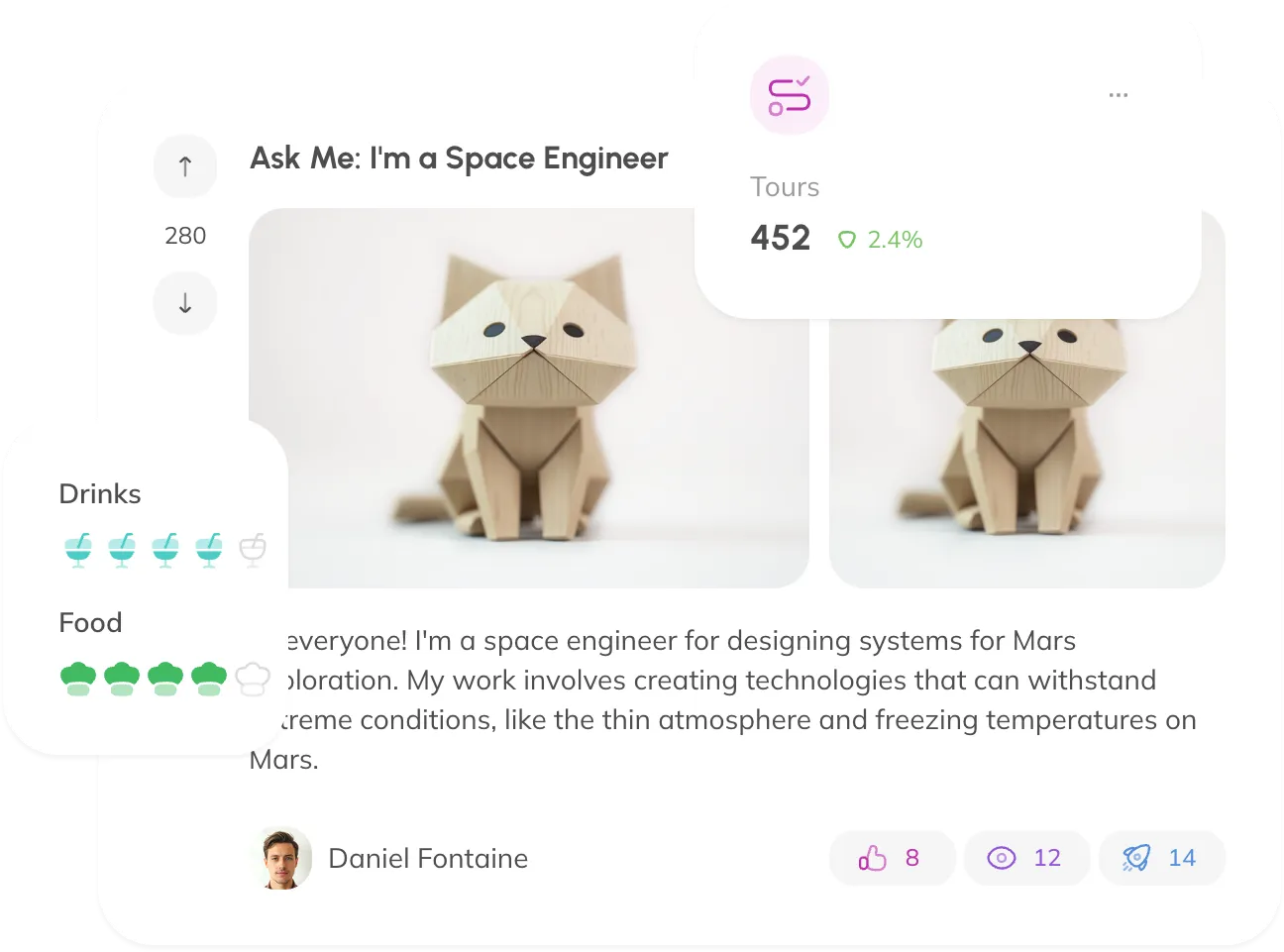
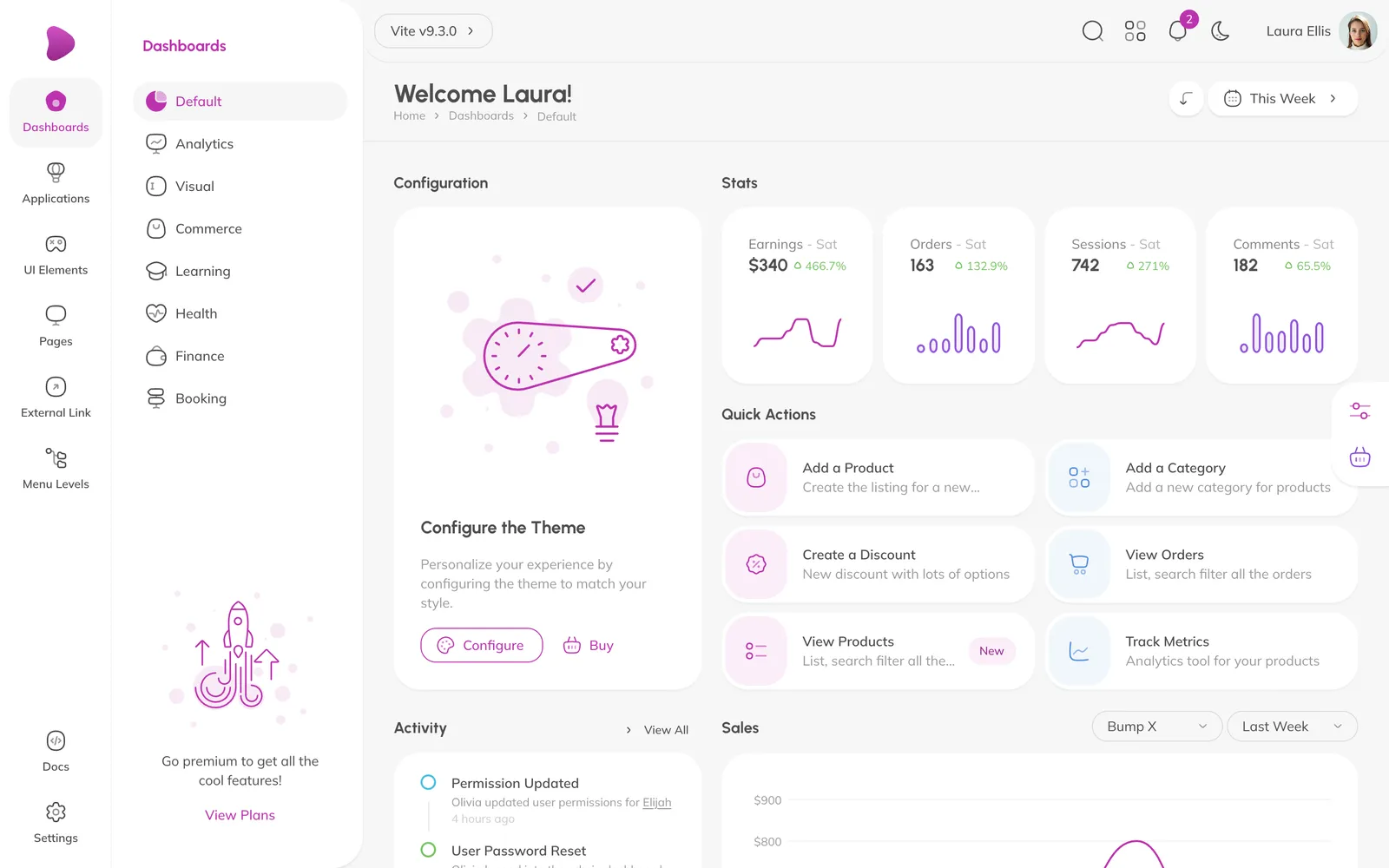
Eight dashboards, five applications and the pages around them. Each one below opens in the live preview.
 Default (opens in a new tab)
 Analytics (opens in a new tab)
 Visual (opens in a new tab)
 Commerce (opens in a new tab)
 Learning (opens in a new tab)
 Health (opens in a new tab)
 Finance (opens in a new tab)
 Booking (opens in a new tab)
AI Chat, AI Content, Drive, Messages, Calendar
Four colour themes in light and dark, switched at runtime. Each sets the primary, secondary and accent colours across every component.
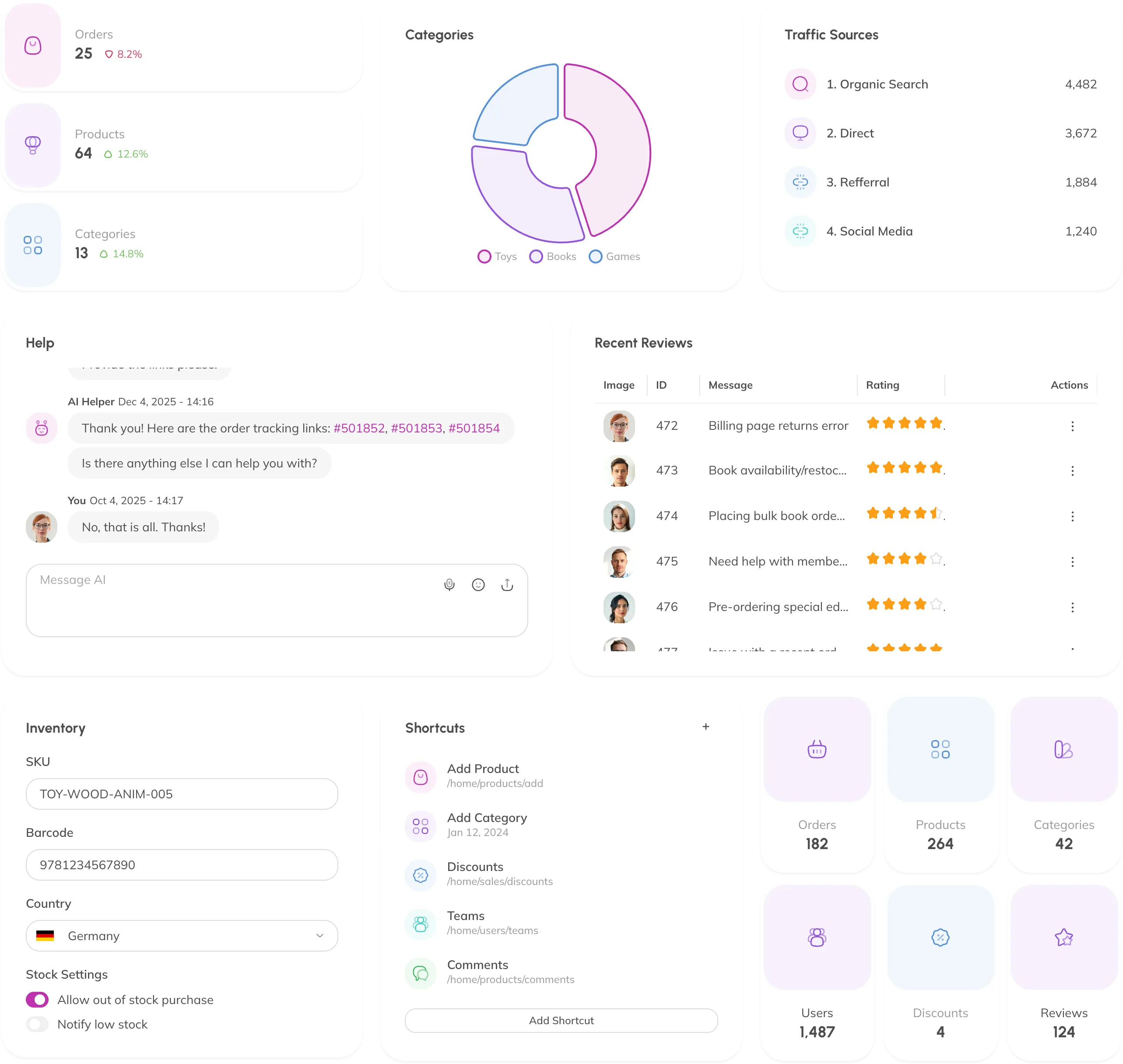
The pieces every screen is assembled from, each one usable on its own.
React19.2.8
The UI library, on its latest major.
TypeScript5.8.3
Strict types across every page and component.
MUI9.0.1
The component set every screen is built from.
MUI X9.3.0
Data grid, charts, date and time pickers, tree view.
Tailwind CSS4.2.2
Utilities for layout and the template's own styling.
Formik2.4.6
Forms and validation, with Yup schemas.
Vite8.2.2
The build tool behind Gogo for Vite.
Next.js16.3.3
The App Router build of Gogo.
Same screens, same components, same Figma file. Take the build your project already uses; if you have no constraint, the table decides.
| Property | Gogo for Vite | Gogo for Next.js |
|---|---|---|
| Current version | 9.2.0, 25 November 2026 | 9.2.0, 25 November 2026 |
| Framework | React 19.2.8 | React 19.2.8 on Next.js 16.3.3 |
| Routing | React Router 8.3.1 | Next.js App Router, file-based |
| Rendering | Client-rendered single-page app | Server components with client islands; SSR and static generation available |
| Take it when | The app lives behind a login and you want the smallest setup. | Any part of it needs server rendering, metadata or indexing. |
| On ThemeForest | 3,000+ sales · 4.3 from 100+ | 2,000+ sales · 4.8 from 50+ |
| Full spec, changelog, FAQ | Full spec, changelog, FAQ |
The Regular licence fits most projects. The Extended licence is for products your end users pay for. Both are sold on ThemeForest, per build.
$28
Fits most projects. All the design and code files, for one end product.
$800
Everything in the Regular licence, for products your end users pay for, such as SaaS.
Turn your ideas into polished products. Craft beautiful, consistent applications with modular, customisable UI components, designed and coded on best practice.
The calm one. An icon-only rail, sharp corners, warmer surfaces, more air.
Permissions, audit trails, server-side tables, a real API behind these screens. The team that built this does that work too.